
The Future of Work in Nigeria: What 2026 Will Demand From You

For a long time, “work” in Nigeria followed a predictable script.
You woke up early, sat in traffic, got to an office (or didn’t), worked around power issues, slow internet, distractions, and burnout. Then you repeated the cycle.
That script is officially outdated.
By 2026, the future of work in Nigeria won’t be defined by job titles or office buildings. It will be shaped by how well you adapt, how you manage your energy, and where you choose to do your work.
The rules are changing quietly, but clearly. And if you’re paying attention, the signals are everywhere.
Here’s what 2026 will demand from you, and how to stay ahead of it.
1. Consistency Will Matter More Than Hustle
Nigeria loves hustle culture. We celebrate long hours, late nights, and doing “the most.” But the future of work isn’t impressed by burnout.
In 2026, the people who stand out won’t be the busiest, they’ll be the most consistent. Consistency means:
- Showing up regularly, not sporadically
- Building routines you can sustain
- Working in environments that support focus
- Choosing systems over stress
This is why flexible workspaces and coworking hubs are becoming essential, not as a luxury, but as infrastructure. When power is stable, Wi-Fi works, and distractions are minimal, consistency becomes possible. That’s not motivation, that’s environmental design.

2. Your Workspace Will Become a Strategic Decision
“Anywhere can be a workspace” sounded cute in 2020. In 2026, we know better. Where you work affects:
- How long you can focus
- How clearly you think
- How often you procrastinate
- How seriously you take your own goals
Working from home works, until it doesn’t. Noise, interruptions, isolation, unreliable power, and blurred boundaries eventually catch up.
The future of work in Nigeria will favour people who intentionally choose their workspace, depending on what they need:
- Deep focus
- Collaboration
- Creative work
- Meetings
- Content creation
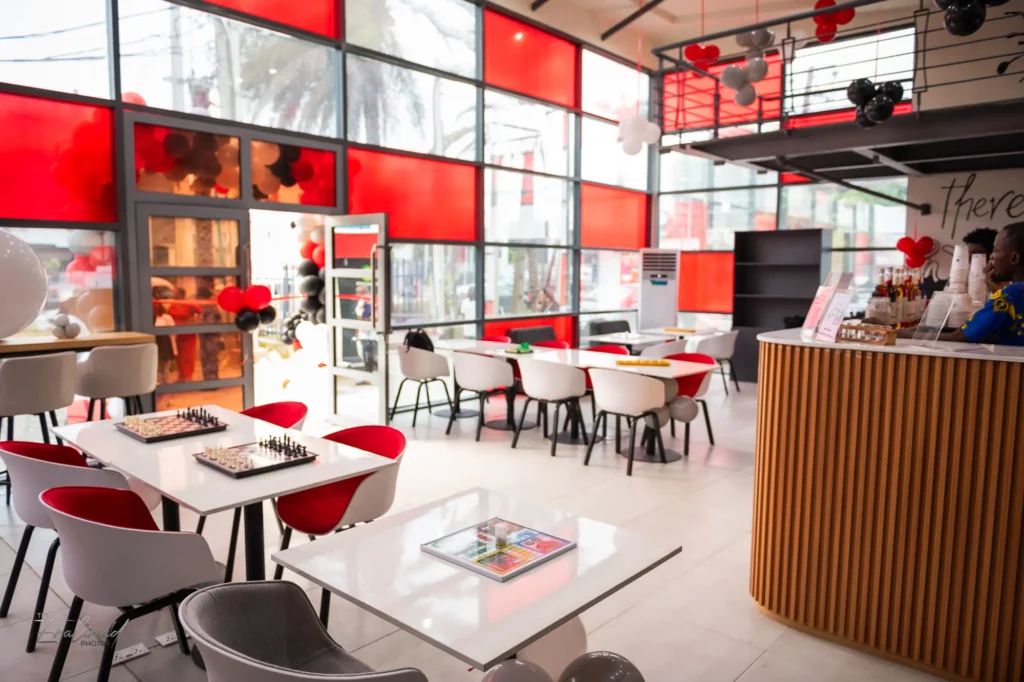
This is why coworking spaces like Café One are no longer just cafés with Wi-Fi. They’re structured environments for modern work designed for different work modes, not just sitting with a laptop and hoping for the best.
3. Skills Will Matter More Than Job Titles
By 2026, your job title won’t protect you. Your skills will. Nigeria’s workforce is getting younger, more digital, and more competitive. Employers and clients are paying attention to:
- What you can do
- How fast you can learn
- How well you communicate
- How you think, not just what you know
This is why creators, freelancers, consultants, and remote workers are thriving. They’re building visible skill stacks, often through content, communities, and side projects. Podcasting. Writing. Teaching. Building in public.
The future belongs to people who can show what they know, not just say it on a CV. And, having access to creator-friendly spaces, like Café One’s Creator Rooms, makes that easier to execute consistently.

4. Work Will Be More Social Than You Think
Remote work didn’t kill human connection. It made us crave better connection. In 2026, working alone all the time will be a disadvantage. Why?
- Ideas grow faster in communities
- Opportunities come from conversations
- Motivation increases around other builders
- Learning becomes more organic
The future of work in Nigeria will be community-driven. Not forced networking, but natural proximity to people doing interesting things.
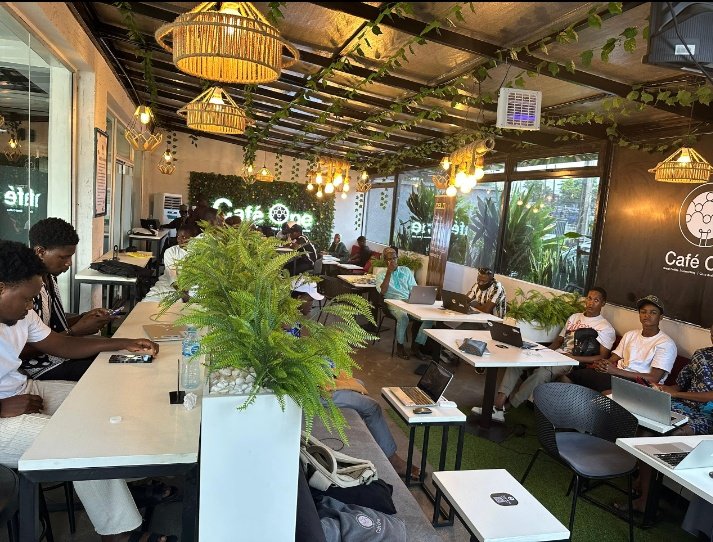
This is why coworking spaces that prioritize community; events, workshops, casual interactions, will keep winning. People don’t just want desks. They want belonging, momentum, and shared energy.
5. Flexibility Will Be Non-Negotiable
Rigid schedules and one-size-fits-all workdays are fading. By 2026, work will need to fit into real life, not fight it. That means:
- Flexible hours
- Hybrid routines
- Workspaces that adapt to different needs
- Access without long-term rigidity
People want options. Some days require silence. Others need collaboration. Some need a meeting room. Others just need coffee and clarity.
The future of work in Nigeria rewards spaces and people who understand that flexibility isn’t laziness. It’s efficient.
6. Focus Will Become a Competitive Advantage
Distraction is the new epidemic. Phones. Notifications. Noise. Chaos. Endless content. In 2026, the ability to focus deeply will separate high performers from everyone else.
This is why intentional environments matter more than ever. Focus isn’t just discipline, it’s design. When you remove friction:
- You finish tasks faster
- You make better decisions
- You think more clearly
- You produce higher-quality work
The future belongs to people who protect their attention like an asset.
7. Your Relationship With Work Will Change
This is perhaps the biggest shift of all. Work in 2026 won’t just be about income. It will be about:
- Sustainability
- Mental clarity
- Growth
- Balance
- Meaning
People are no longer impressed by suffering for work. They’re choosing smarter ways to build careers, businesses, and creative lives. That’s why spaces like Café One exist. Not just to give you somewhere to sit, but to support a healthier relationship with work itself.

So, What Does This Mean for You?
The future of work in Nigeria isn’t coming. It’s already here. And 2026 will reward people who:
- Choose consistency over chaos
- Design their environment intentionally
- Invest in skills, not just titles
- Build in community
- Protect their focus
- Work smarter, not louder
You don’t need to change everything overnight. But you do need to be honest about what’s working and what isn’t. Where you work, how you work, and who you work around… Those decisions matter more than ever. And whatever you’re building next, there’s a Café One hub where it can happen.
Previous Article
5 Signs You’re Ready to Start a Podcast in 2026Next Article
How to Reset Your Team’s Energy in 2026